1. What each suit means
Each playing-card suit lines up with one of tarot's four suits and one of the four classical elements. That is why a reading with playing cards feels so close to a tarot reading.
| Suit | Tarot twin | Element | What it's about |
|---|---|---|---|
| Hearts | Cups | Water | Love, feelings, friendship, home and family. |
| Diamonds | Pentacles | Earth | Money, work, possessions and practical matters. |
| Clubs | Wands | Fire | Drive, ambition, growth and new plans. |
| Spades | Swords | Air | Thinking, conflict, decisions and hard truths. |
2. What the numbers mean
Readers use different systems. This is a common one, and it matches the numbered cards in tarot. Put suit and number together: the five of hearts is a change in a relationship, the ten of diamonds is money or work that has come to a finish.
| Card | Meaning |
|---|---|
| Ace | A beginning, a seed, a single strong force |
| 2 | A pair, a choice, a balance |
| 3 | Growth, a group, first results |
| 4 | Stability, rest, holding on |
| 5 | Change, friction, a setback |
| 6 | Harmony, help, moving on |
| 7 | A test, reflection, a choice to make |
| 8 | Movement, effort, power |
| 9 | Nearly there, a wish |
| 10 | Completion, the end of a cycle |
3. The court cards are people
Jack
A young person, a messenger or news on the way. Also your own eager, learning side.
Queen
Someone who knows the suit from the inside: care with hearts, sharp judgement with spades.
King
Authority and mastery: a boss, a parent, or you when you are fully in charge.
Tarot has four court cards per suit: Page, Knight, Queen and King. On playing cards the Jack covers both the Page and the Knight.
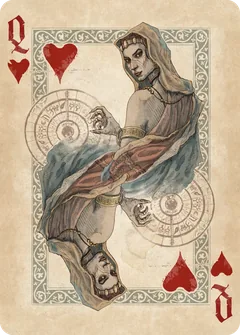
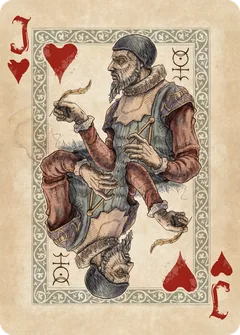
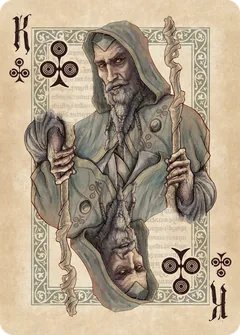
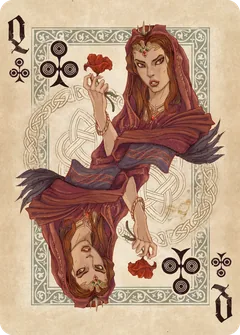
Reading with the Wizards, Witches & Warlocks deck
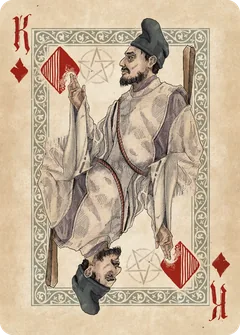
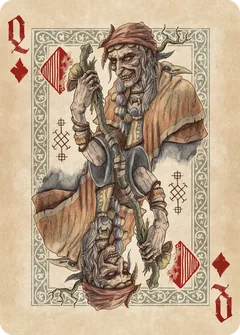
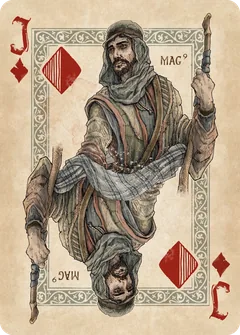
We built our Wizards, Witches & Warlocks deck on the same four elements, so every court card gives you a face to read. Drew the Queen of Spades? That's Hecate, goddess of crossroads: a clear-eyed woman, or a choice you can't put off.
Spades: Air
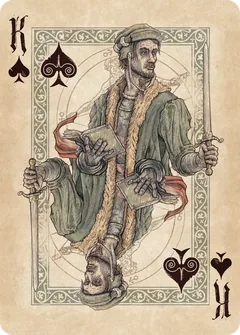
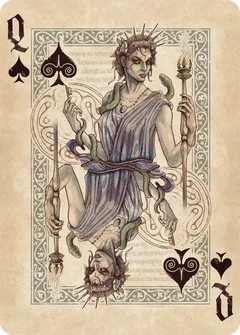
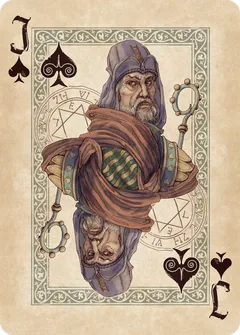
Hearts: Water
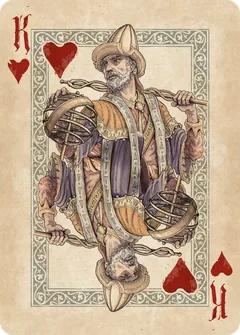
Clubs: Fire
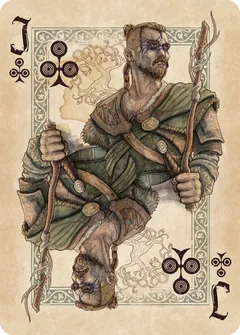
Diamonds: Earth
See the Wizards, Witches & Warlocks deck
Reading with the Creatures of the Fae deck
Our Creatures of the Fae deck splits its court cards between the two faery courts of Scottish folklore. The red suits belong to the Seelie court, the faeries who are friendly to people if you treat them well. The black suits belong to the Unseelie court, the ones you hope not to meet on a dark road. That lines up neatly with an old card-reading habit: red cards lean lucky, black cards lean toward trouble.
Diamonds: Seelie court
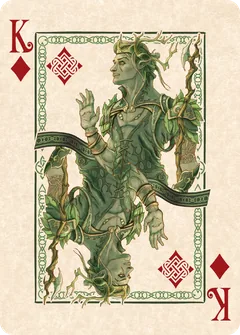
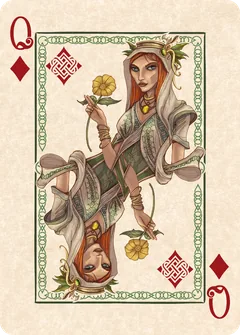
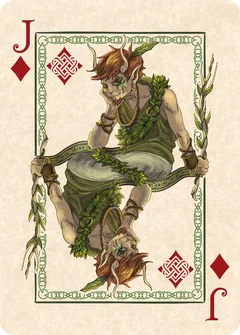
Hearts: Seelie court
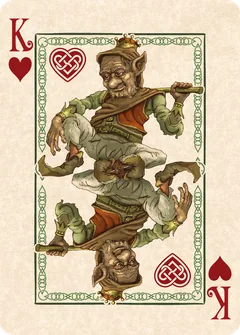
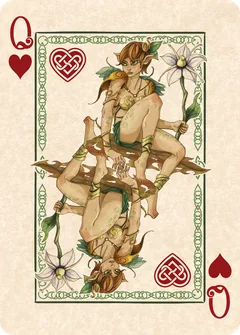
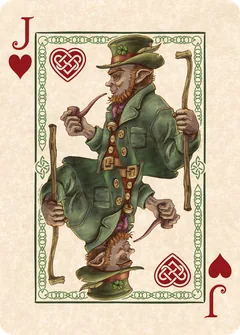
Spades: Unseelie court
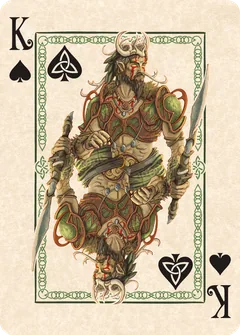
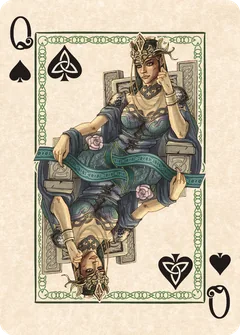
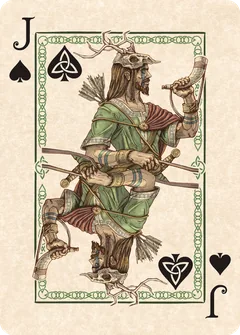
Clubs: Unseelie court
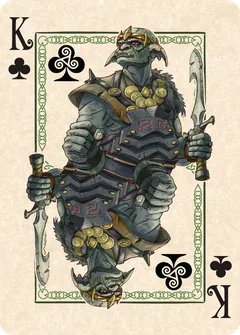
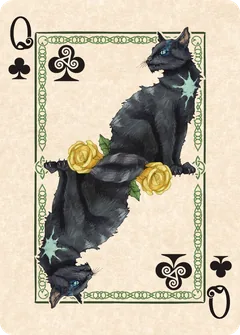
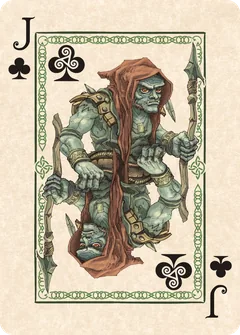
So the Queen of Hearts is a Pixie, playful and warm; the Queen of Spades is Mab, queen of dreams and of the darker court. Read the court card's folklore into the reading and the meaning gets sharper. See the Creatures of the Fae deck
Card art by Guzo Borboa for Gent Supply Co., from the Bicycle editions of both decks.
4. Try a three-card reading
- Decide what to do with the jokers: take them out, or keep one as a wild card.
- Think of your question while you shuffle. Cut the deck once.
- Lay three cards left to right: what led here, where you are now, what comes next.
- Read each card on its own, then read the three as one story.
Question: "Should I take the new job?"
Seven of hearts, what led here: you've been weighing how you feel about where you are.
Queen of spades, now: clear thinking is called for, maybe from a sharp woman whose advice you trust. On our deck this is Hecate, the goddess of crossroads.
Ace of diamonds, what comes next: a new start with money or work. Taken together, the cards lean toward yes, once you've thought it through.
Every tarot spread works with playing cards. Try the Celtic Cross when you want more detail.
A short history
Reading ordinary playing cards is older, as a published practice, than reading tarot. In 1770 a Paris card reader who called himself Etteilla published the first book on telling fortunes with cards. He used a 32-card piquet deck, an ordinary French deck with the twos to sixes taken out. Only in the 1780s did he and others turn to tarot. Short 32-card methods are still popular in Europe; the full 52-card deck is more common in English-speaking countries.
Questions people ask
What is cartomancy?
Fortune telling, or reflection, with cards. Tarot is one kind; reading an ordinary 52-card deck is another, and it is older as a published practice.
Do I need a special deck to read playing cards?
No. Any standard deck works. A deck whose courts are real characters, like our Wizards, Witches & Warlocks, just gives you faces to read.
What do I do with the jokers?
Most readers take them out. Some keep one as a wild card that stands for a surprise or a fresh start, much like The Fool in tarot.
Do reversed cards count with playing cards?
Usually not. Many playing cards look the same either way up, so most readers read every card upright.
Can I use tarot spreads with playing cards?
Yes. Any spread works, including the three-card spread and the Celtic Cross.
New guides by email
One short email when a new spread or guide goes up. We'll send a confirmation email first.